Losing teeth does more than just change your smile; it can shift how you eat, speak, and feel about yourself. If you are navigating life with missing teeth, you likely already know that finding a solution is about more than just aesthetics—it is about reclaiming your quality of life.
When you start looking for answers, the terminology can get overwhelming quickly. You might hear about traditional dentures, bridges, implants, and something called “All-on-4.” It is normal to feel unsure about which path is right for you.
We believe that the best decisions are made when you have clear, honest information. Whether you are looking for the most affordable option or the most permanent one, understanding the pros and cons of traditional dentures versus All-on-4 implants is the first step toward a confident new smile. Let’s explore these two popular restorative options so you can move forward with confidence.
What are Traditional Dentures?
You are likely already familiar with traditional dentures. They have been the standard solution for replacing a full arch of missing teeth for generations.
Traditional dentures are removable appliances made from a gum-colored acrylic base and artificial teeth. They sit on top of your gums and rely on suction, the natural contours of your jaw, and sometimes a little dental adhesive to stay in place.
For many people, dentures are an accessible entry point to smile restoration. They are generally the most affordable option upfront and the process to get them is non-invasive, meaning no surgery is required. However, because they sit on top of the gums rather than anchoring into the bone, they can sometimes feel less stable than natural teeth.
What is the All-on-4 Treatment Concept?
The All-on-4 treatment concept is a modern alternative that bridges the gap between dentures and individual dental implants.
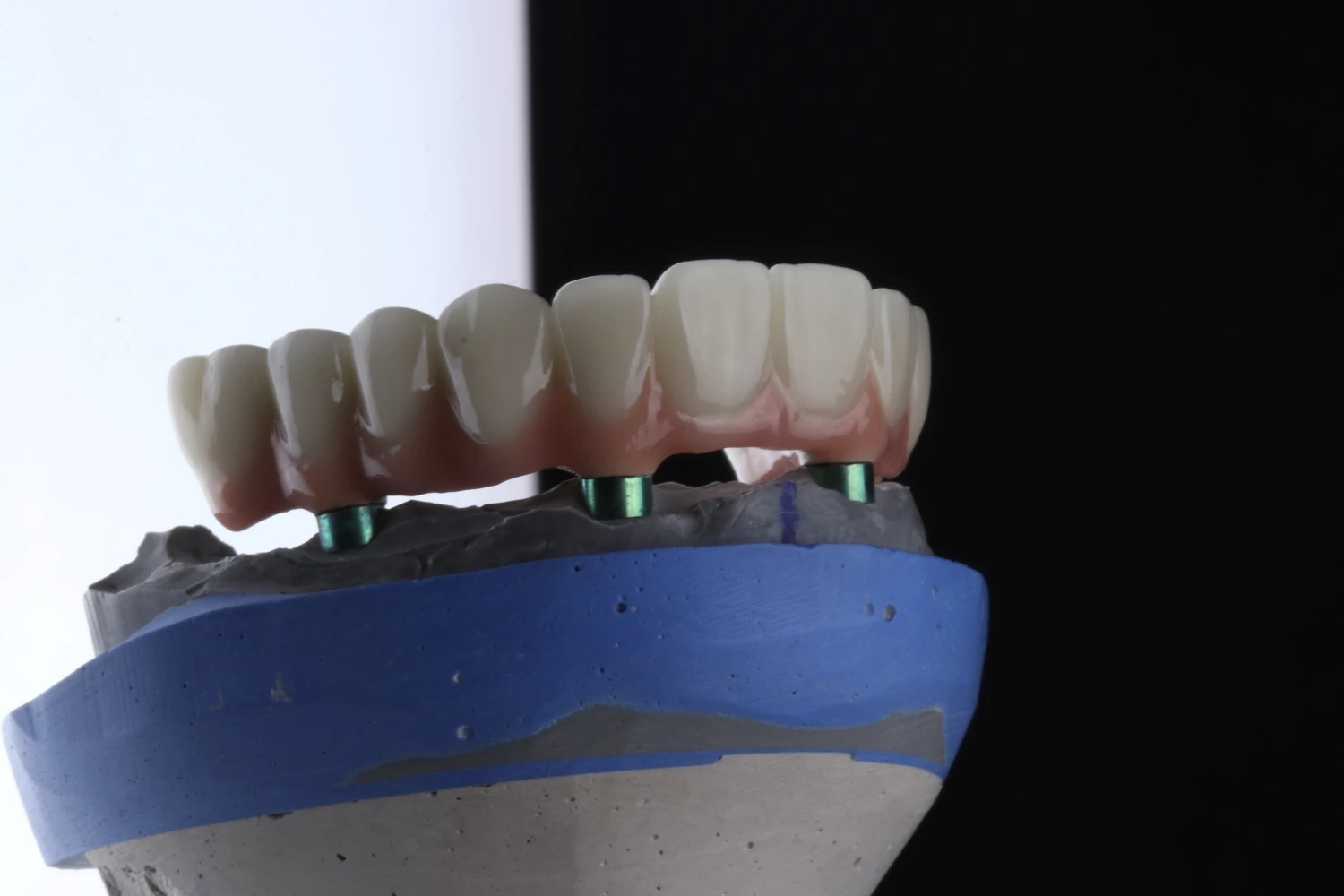
Instead of replacing every single lost tooth with an individual implant—which would be expensive and surgically complex—this technique uses just four strategically placed titanium implants to support a full arch of fixed teeth.
Here is the clever part: two implants are placed vertically in the front of the jaw, while the two back implants are placed at a 45-degree angle. This tilting allows the implants to grip better bone density, often eliminating the need for bone grafting, which is a common hurdle in standard implant procedures. Once these implants are placed, a permanent set of teeth is attached to them. Unlike dentures, you do not take these out at night. They look, feel, and function much like your natural teeth.
Key Differences Between All-on-4 and Dentures
To help you decide which option fits your lifestyle, let’s look at how they compare in the areas that matter most to your daily life.
Stability and Comfort
One of the biggest concerns for denture wearers is stability. Because traditional dentures rest on the gums, they can slip or shift when you laugh, cough, or eat tough foods. This movement can sometimes cause sore spots on the gums. Upper dentures also cover the roof of your mouth (the palate) to create suction, which can interfere with how you taste food and may trigger a gag reflex in some people.
All-on-4 implants offer a completely different experience. Because they are anchored into your jawbone, they are completely stable. You can bite into an apple or eat a steak without worrying about your teeth moving. Furthermore, the appliance does not cover the roof of your mouth, allowing you to taste your food fully and speak naturally without that bulky feeling.
Bone Health and Facial Structure
This is a crucial medical difference that many patients aren’t aware of. Your jawbone needs stimulation from tooth roots to stay healthy and dense. When teeth are missing, the jawbone naturally begins to shrink or resorb over time.
Because traditional dentures sit on top of the gums, they do not provide this stimulation. Over years, this can lead to bone loss, which changes the shape of your face and can give the appearance of premature aging or a “sunken” look.
All-on-4 implants act like artificial tooth roots. They stimulate the jawbone, which helps preserve your facial structure and bone density. By choosing this option, you are not just replacing teeth; you are actively protecting the foundation of your oral health.
The Daily Routine: Maintenance
If you choose traditional dentures, your routine will involve removing them every night to soak them in a cleaning solution. This gives your gum tissues a chance to rest. You will also need to brush the dentures daily and clean your gums to prevent infection.
Maintenance for All-on-4 implants is much closer to caring for natural teeth. You brush them twice a day and floss (using special threading tools designed for implants). You do not remove them at night, and you don’t need to deal with messy adhesives or soaking cups. For many, this seamless integration into daily life is a major selling point.
Longevity and Durability
When we look at the lifespan of these restorations, the differences are significant.
- Traditional Dentures: According to the Cleveland Clinic, the average lifespan of a denture is seven to 10 years. Because your jawbone changes shape over time, you will also need to visit your dentist every year or two for a “reline” to ensure they still fit correctly.
- All-on-4 Implants: These are designed to be a long-term solution. The titanium implants themselves can last a lifetime with proper care. The prosthetic teeth attached to them may need repair or replacement after 15 to 20 years due to normal wear and tear, but the foundation remains solid. High success rates—often cited between 95% and 98%—make this a reliable investment.
Comparing the Procedures
Knowing what to expect in the dentist’s chair can help alleviate anxiety.
The Denture Process
Getting traditional dentures is usually straightforward. It involves taking precise impressions (molds) of your mouth, creating a wax model to check the fit and look, and then fabricating the final set. If you need teeth extracted, there will be a healing period before your final dentures can be fitted, though “immediate dentures” are often available to wear during the healing phase.
The All-on-4 Process
This is a surgical procedure. You will likely be under sedation or anesthesia to ensure you are comfortable. The dentist or oral surgeon will extract any remaining failing teeth and place the four implants into your jawbone.
In many cases, you can leave the office the same day with a temporary set of fixed teeth—this is often called “Teeth in a Day.” Over the next three to six months, a process called osseointegration happens, where your jawbone fuses to the implants. Once fully healed, your final, permanent teeth are attached.
Understanding the Investment
Cost is often the deciding factor for many patients, and it is important to look at both the short-term and long-term financial picture.
Traditional dentures are significantly cheaper upfront. If budget is your primary constraint right now, they are an effective way to restore your smile immediately. However, you should factor in the ongoing costs of adhesives, cleaning solutions, relining procedures, and eventual replacement every decade.
All-on-4 implants have a higher initial price tag due to the surgery and high-quality materials involved. However, because they are a permanent solution that protects your bone health and rarely requires replacement, many patients view them as a better long-term investment. Financing options are often available to help make this life-changing procedure more manageable.
Your Smile, Your Choice
Choosing between All-on-4 implants and traditional dentures is a personal decision that depends on your health, your budget, and your lifestyle goals. There is no single “right” answer—only the answer that is right for you.
If you are looking for the most economical way to smile again, traditional dentures are a time-tested solution. If you want a permanent, stable solution that feels like getting your natural teeth back, All-on-4 might be the investment you have been looking for.
We encourage you to schedule a consultation with a dental professional who can assess your specific needs, check your bone density, and guide you toward the best choice. You deserve a smile that makes you feel like the best version of yourself.